
I’ve had the Suzuki DR650 for 3 years until late December 25. I bought it exclusively for offroad use, and traveled with it 17,000 km.
I wrote a long term review of the DR650 here, and it was obvious the bike is capable, but never felt “complete”, with the main downside being the suspension, that even after heavy modifications could not bring the bike to the level of the Husqvarna 701.
So with a heavy heart I sold it, and bought a 2023 Husqvarna 701 Enduro this January. It has the stock final drive ratio 15-46, suspension mods, Rade Garage air filter kit (with a compartment box, instead of the large air box).
The comparison to the DR650 was inevitable at the first few rides. I must admit at first I missed the Suzuki engine: heavy flywheel, low bottom end grunt that feels to pull from very low rpm, very useful in slow technical terrain, especially in not comfortable circumstances (uphill + twists, for example).
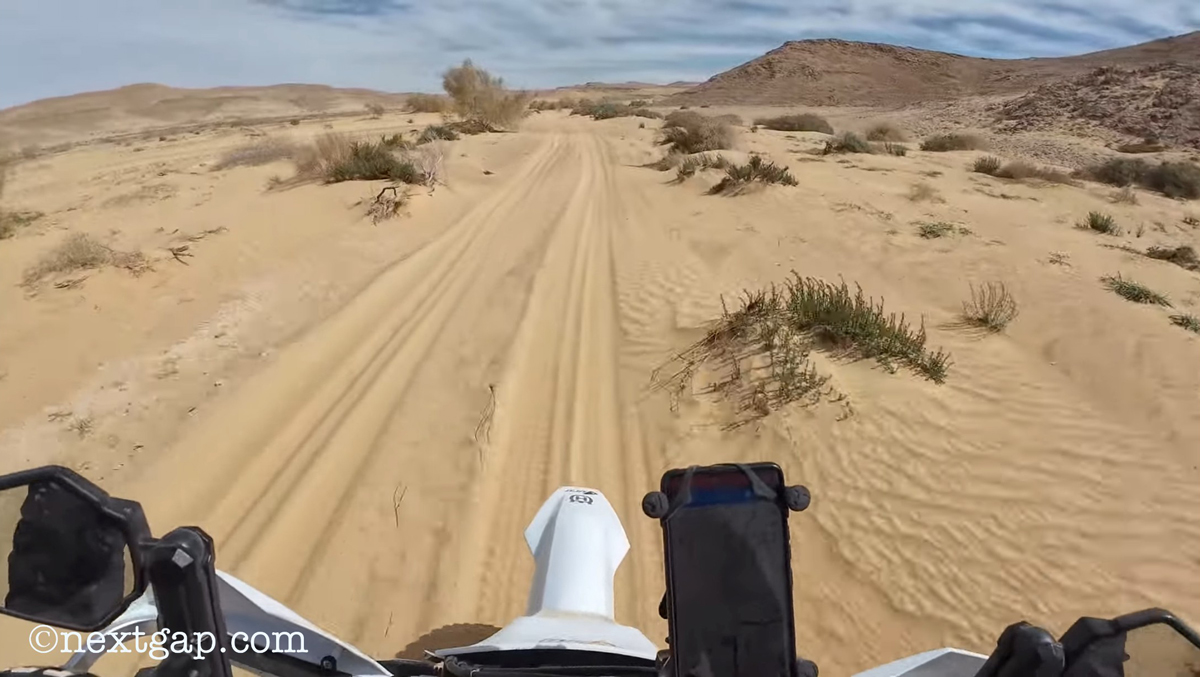
I’ve already made two long trips with the 701, and only after the last one the past weekend, I could say clearly that I do not miss the Suzuki and it was the last goodbye. The 701 turned out to be a much better and complete machine, the suspension is such an important part of the bike and only after riding on river beds (gravel) and deep sand, I felt the great advantage the 701 has, over the DR650, in one very important factor – strait line stability. As to why, I have some thoughts:
Weight distribution:
The 701 fuel tank is located at the rear with the main volume being very close to the center of the bike, on both horizontal and vertical axis, meaning the front is less prone to being planted in the sand.
Suspension:
On paper the 701 has the same 260 mm F+R suspension travel as the DR. But travel is less efficient without control, which is structural stiffness and damping. The 701’s WP 48 mm USD fork and modern triple clamps are dramatically stiffer torsionally than the DR’s 43 mm conventional fork. Offroad specifically, fork twist causes vague steering feedback. The DR flexes more under load, especially when the front deflects off from uneven trail (rocks, side incline, pots, etc.). That flex can feel like instability. The 701 simply holds its line better. The 701’s Xplor fork has significantly better mid stroke control and high speed damping. In sand and fast gravel, the front constantly encounters small deflections. If damping is soft or under-controlled like in the DR650, the front oscillates slightly. That feels nervous. The 701 resists that oscillation.
Chasis:
The DR650’s older steel frame and softer swingarm allow slight twist between the steering head and rear wheel under load, which creates small alignment biases that become noticeable when you release the bars, causing the bike to lean left or right, I used to call it “the spaghetti feeling”. The 701’s stiffer chromoly trellis (triangular) frame and more rigid swingarm keep the steering axis and rear wheel plane better aligned, so it tracks straighter and feels more neutral hands-off.
Rear Tire:
The 701 wears an 18″ 140 rear tire vs the DR’s 17″ 120, that’s at least 16.67% increase in contact area. It also contributes to lateral stability, which reduces small rear deflections. Since rear-wheel deflection can steer the bike from the back (if the rear moves left, the bike will want to go right), a 140 is less drift in gravel or sand, while minimizing subtle rear steer while riding.
Conclusion:
The benefits that the DR offers: simplicity and great engine are not enough compared to the modern, more sportier package the 701 has to offer. The hydraulic clutch, the front brake, seat and riding geometry: almost everything in the 701 is well thought off (aside from the gas cap location), even removing the engine bash plate is simple. The 701 has a better fuel consumption than the DR due to the fuel injection.
I am still learning the 701 and will be surly updating later. If you have a 701 or a DR let me know what you think in the comments below.